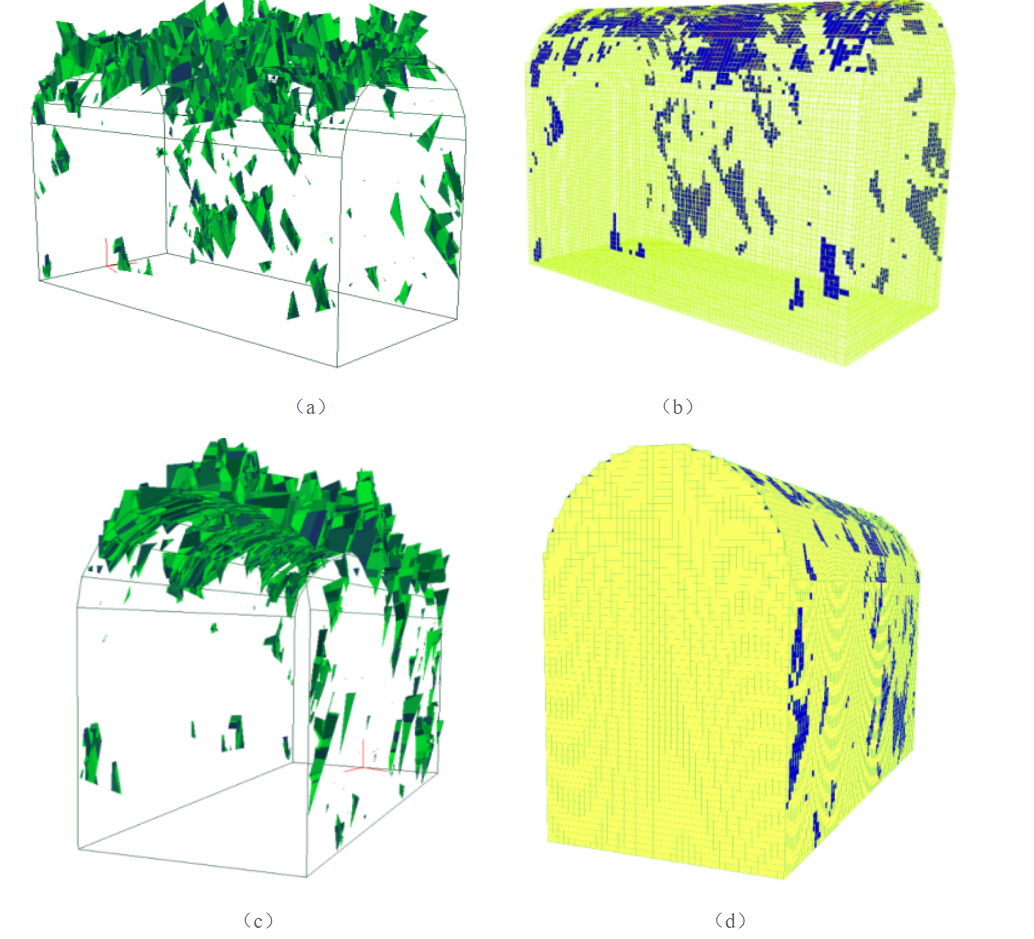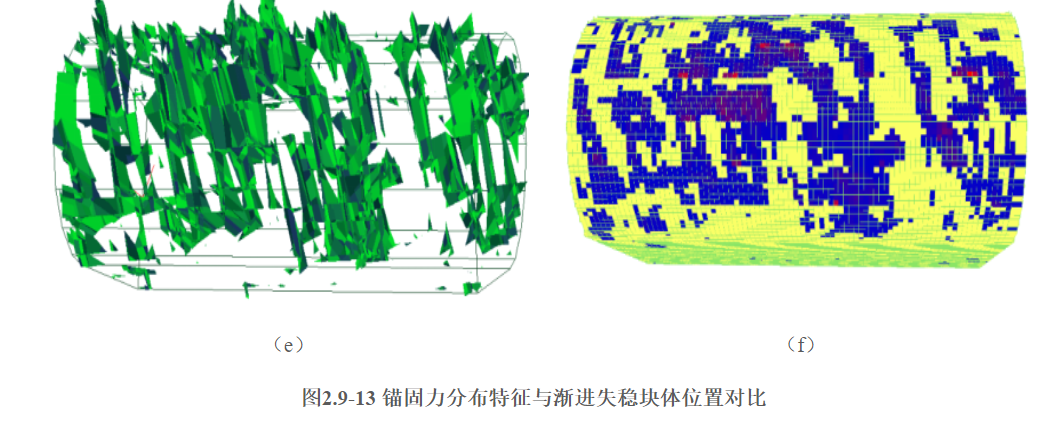

Introduction to Block Theory Engineering Analysis Software
(1) Full space polar projection and analysis: Directly display joint cone types, joint cone motion modes, stability coefficients ignoring cohesive forces, and residual sliding forces on the graph;
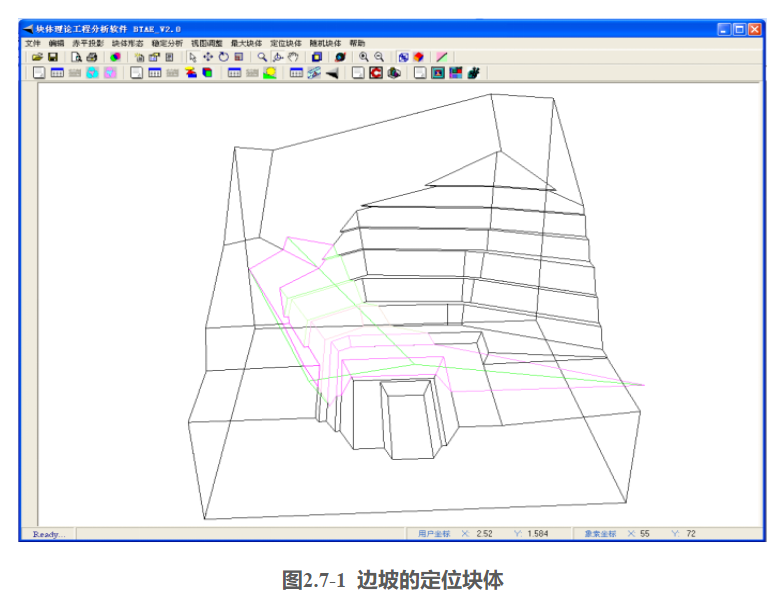
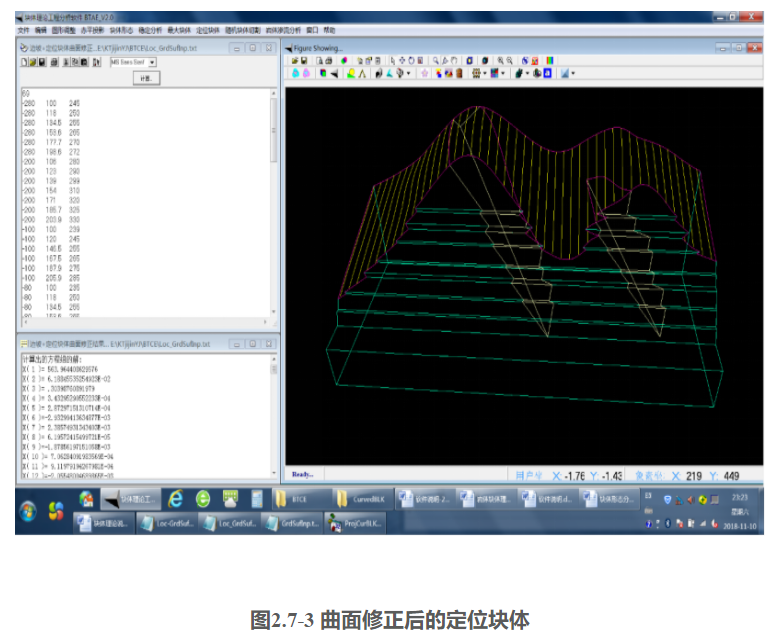
(2) Complex block shape analysis: geometric shape analysis of non positioned blocks; Morphological analysis of positioning blocks, including concave blocks;
(3) Block stability and support force analysis: calculation of block stability coefficient considering the effects of groundwater, earthquakes, external loads, etc., and analysis of block support force; Stability analysis of multiple sliding surface blocks and complex blocks;
(4) Analysis of the maximum block shape of underground caverns;
(5) Balanced region diagram (Londe diagram);
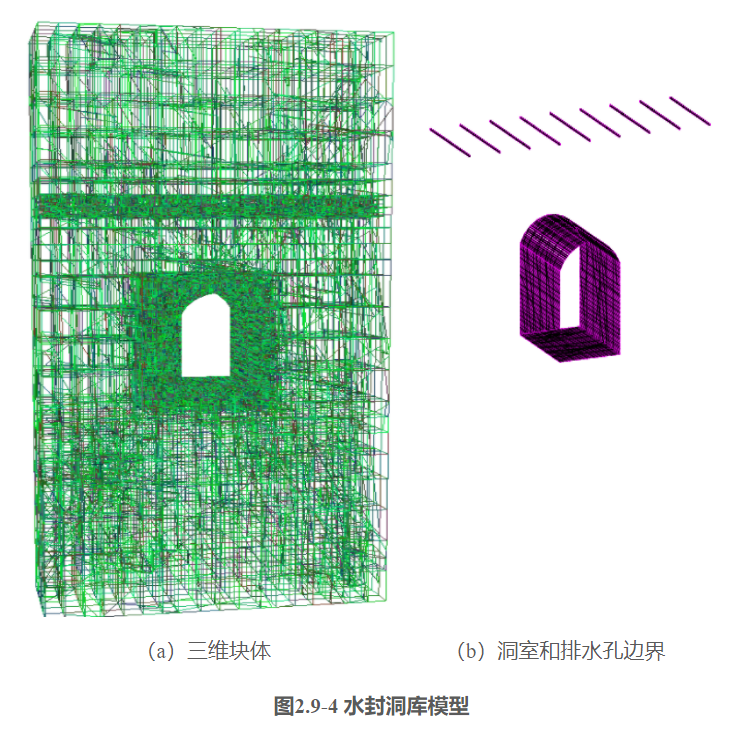
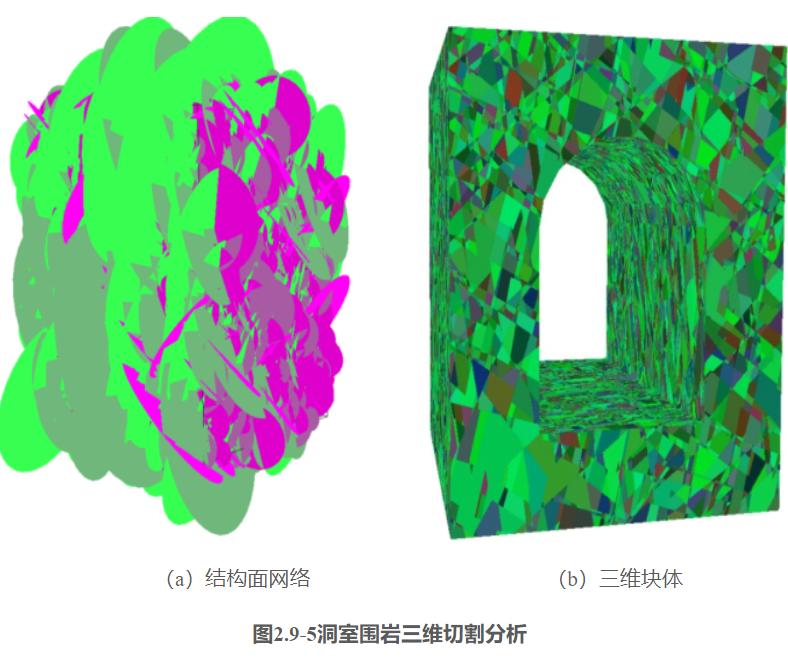
(6) Consider three-dimensional structural surface network simulation of positioning and random structural surfaces; Three dimensional random block geometric search for cave and slope problems; Statistical analysis of block geometric features (size, average size, burial depth, coverage, etc.);
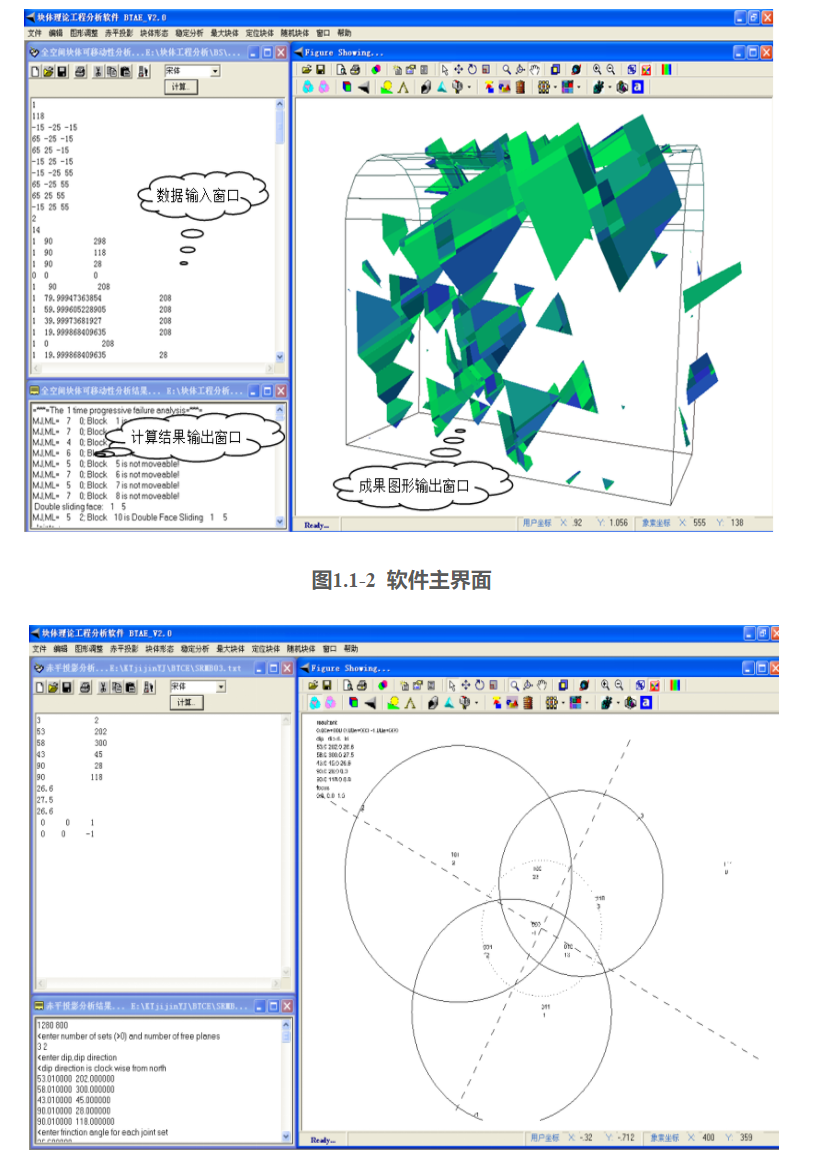
(7) Three dimensional block cutting analysis of slope and cavern rock mass (full space block search), block progressive instability analysis;
(8) Reliability analysis of block structures considering the random distribution of mechanical and geometric parameters of structural planes; Analysis of Block Appearance Probability and Block Failure Probability
(a) (b) (c)
(a) The friction coefficient of the structural surface is taken as 0.5, resulting in 942 unstable blocks; (b) The friction coefficient of the structural plane is taken as 1.0, resulting in 837 unstable blocks; (c) The friction coefficient of the structural surface is taken as 1.5, resulting in 445 unstable blocks
Figure 2.9-10 Progressive instability key block obtained after considering mechanical identification