
Technical Scheme for Underground Pipeline Detection (III) - Soundwave Detection Method
The working principle of active sound source detection method is to emit a specific frequency of sound wave signal into the pipeline through an audio transmitter, and the signal propagates directionally along the pipeline to the far end. At the same time, the sound wave signal propagates directionally in the pipeline pressure gas and propagates through the pipe wall soil to the ground in a three-dimensional manner; At the same time, the receiver captures the sound wave signal on the ground, and by continuously receiving the signal, the volume zone finds the vertical disturbance range of the tube to achieve precise positioning.
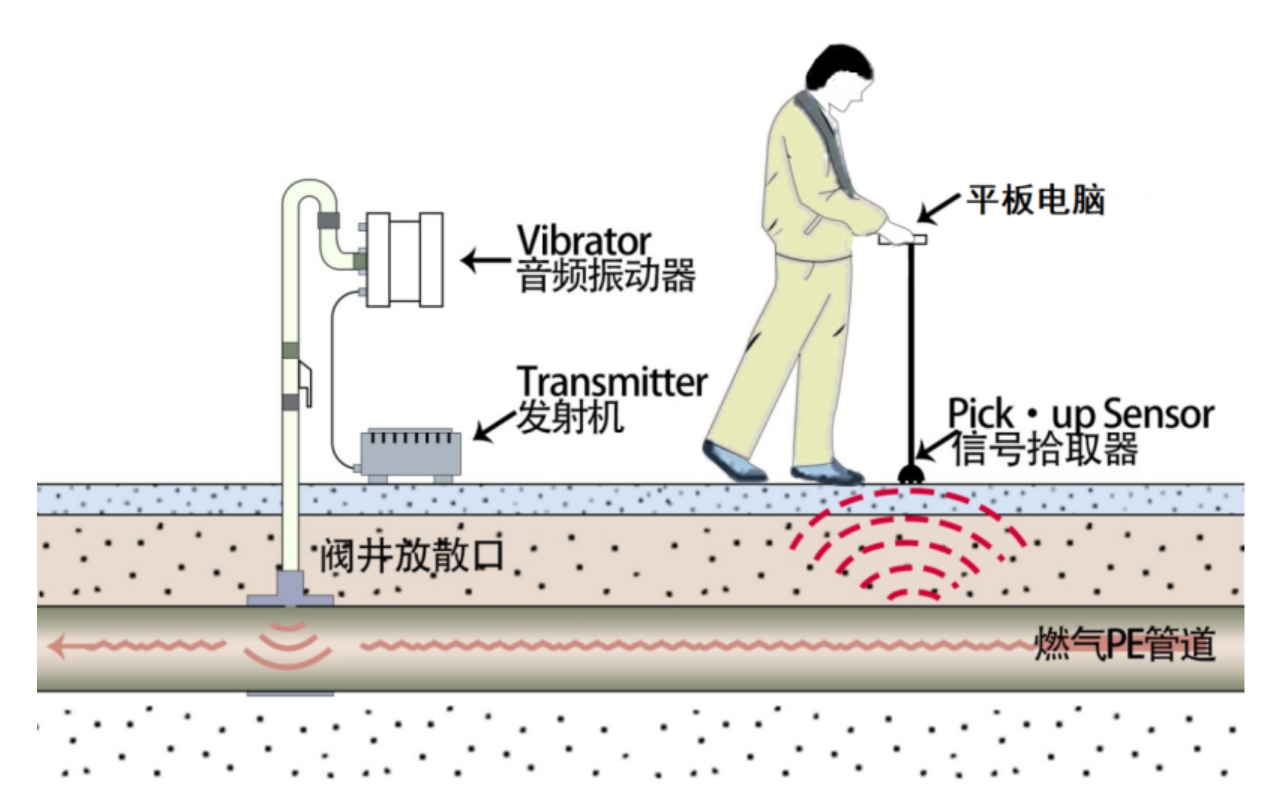
The hidden points of urban gas pipeline network are composed of straight sections, bends, tees, and other parts of the pipeline. During on-site detection, the known valve well is generally used as the starting point to start detection from a distance, gradually identifying the positions of each part of the pipeline network and clarifying the connection relationships between each part of the pipeline, and finally connecting the various parts of the pipeline.
(1) Detection method for straight pipe segments
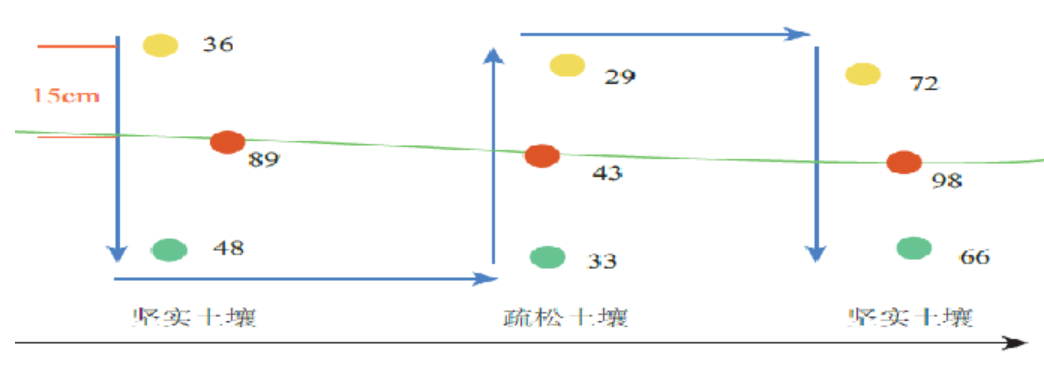
After connecting the sound source PE gas pipeline detector from the known valve well, the detector moves forward along the pipeline in an S-shaped path perpendicular to the general direction of the known pipeline. As shown in Figure 3-3, the measurement point distance is determined based on the signal value. Before the maximum value is detected, the point distance can be increased to quickly find the position with the strongest signal, and then precise measurement can be carried out at the position where the signal strength is concentrated. The distance between each detection point is about 15cm.
(2) Feature point detection method
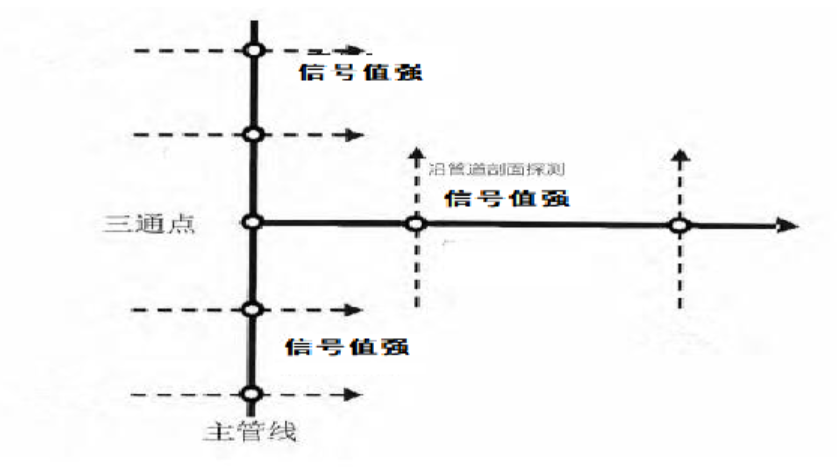
The characteristic points of the pipeline include bends, tees, and other connection points. When the sound source signal passes through bends and tees, due to the resistance and echo effects of the pipe wall caused by vibration signals, the signal will be abnormally strong, resulting in signal gathering effects around the characteristic points. It is difficult to directly determine the position of the pipeline, and geometric intersection method can be used for detection.
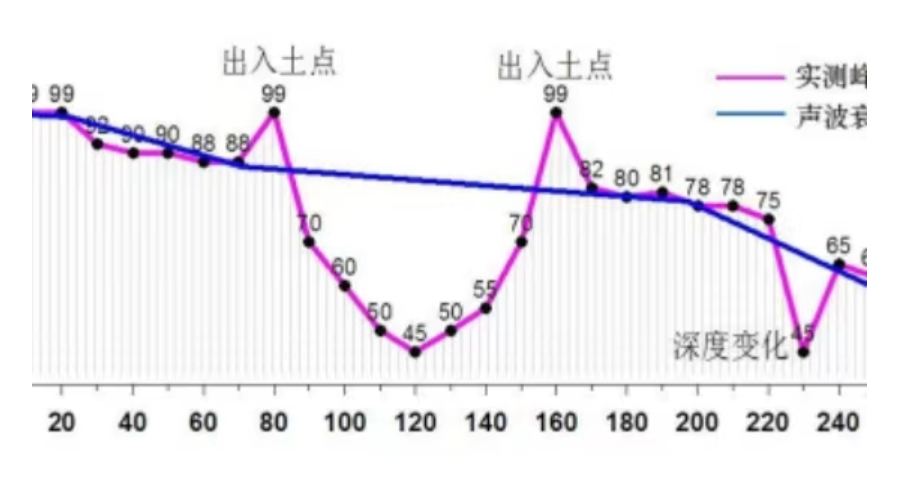
The burial depth of gas pipelines is closely related to the burial method during pipeline laying. The depth of directly buried pipelines is generally affected by the backfilling and renovation of the covering layer above the pipeline, and the depth changes are relatively stable. The depth of directional crossing pipelines is related to the crossing depth during construction, and the depth changes greatly. Therefore, in the process of PE gas pipeline detection, it is very important to use sound source detection method to distinguish the signals of directly buried and crossing pipelines. The signal characteristics of the entry and exit points and crossing sections of the pipeline are clearly different, and the sound source detection method can quickly distinguish the pipeline burial method.